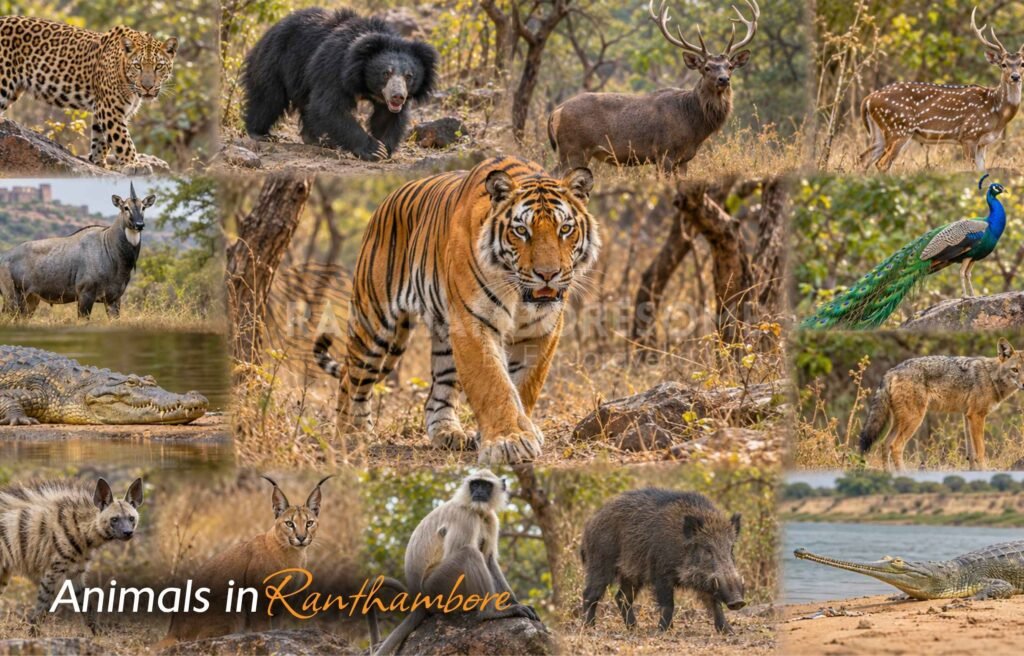
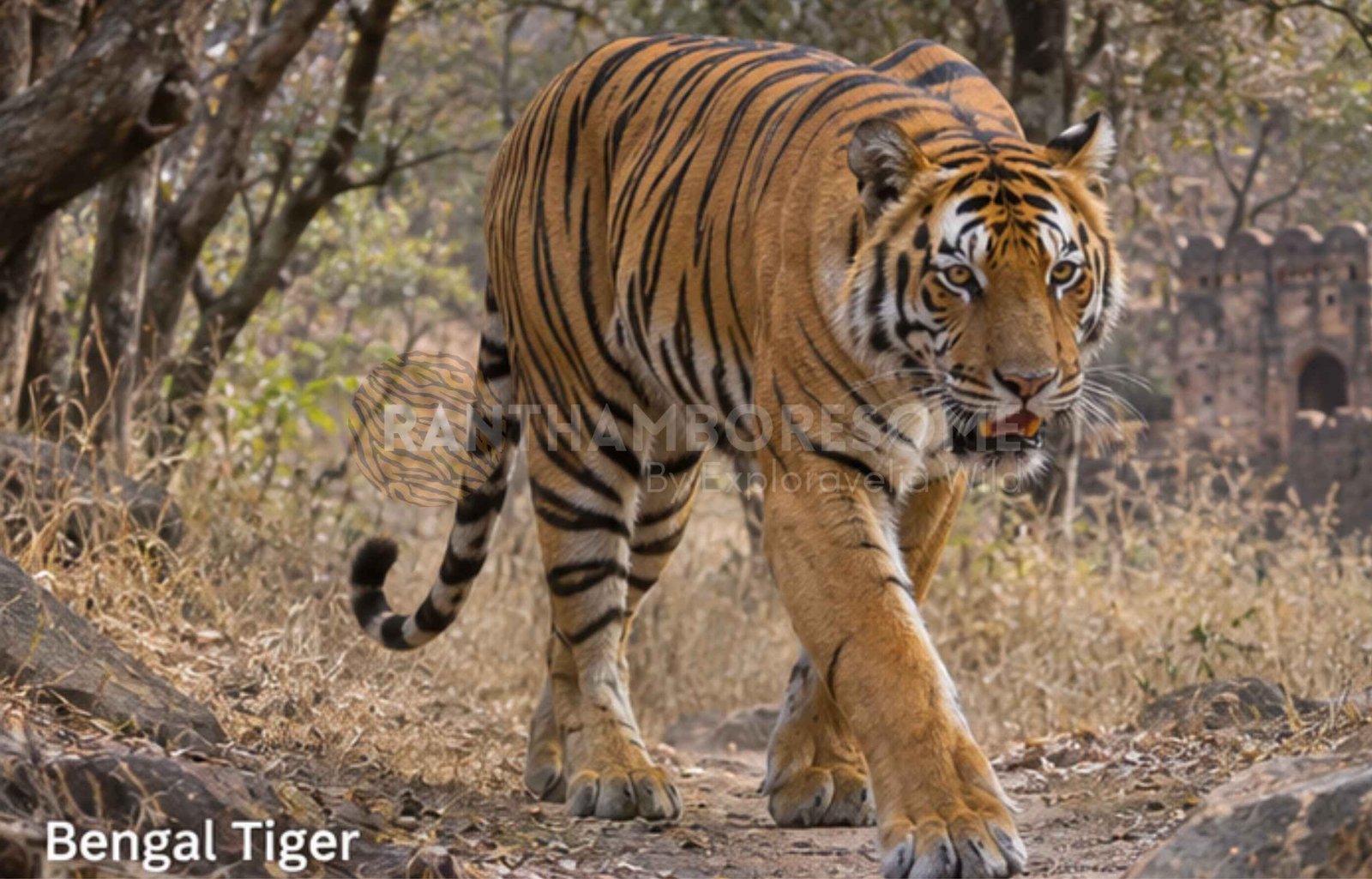
1. Bengal Tiger
Look for the tiger’s orange coat and dark stripes. In broken shade or tall grass, those markings can make its outline hard to pick out. When scanning a clearing, pause at the edges where the grass meets the trees. A few seconds of watching can reveal movement you missed at first.
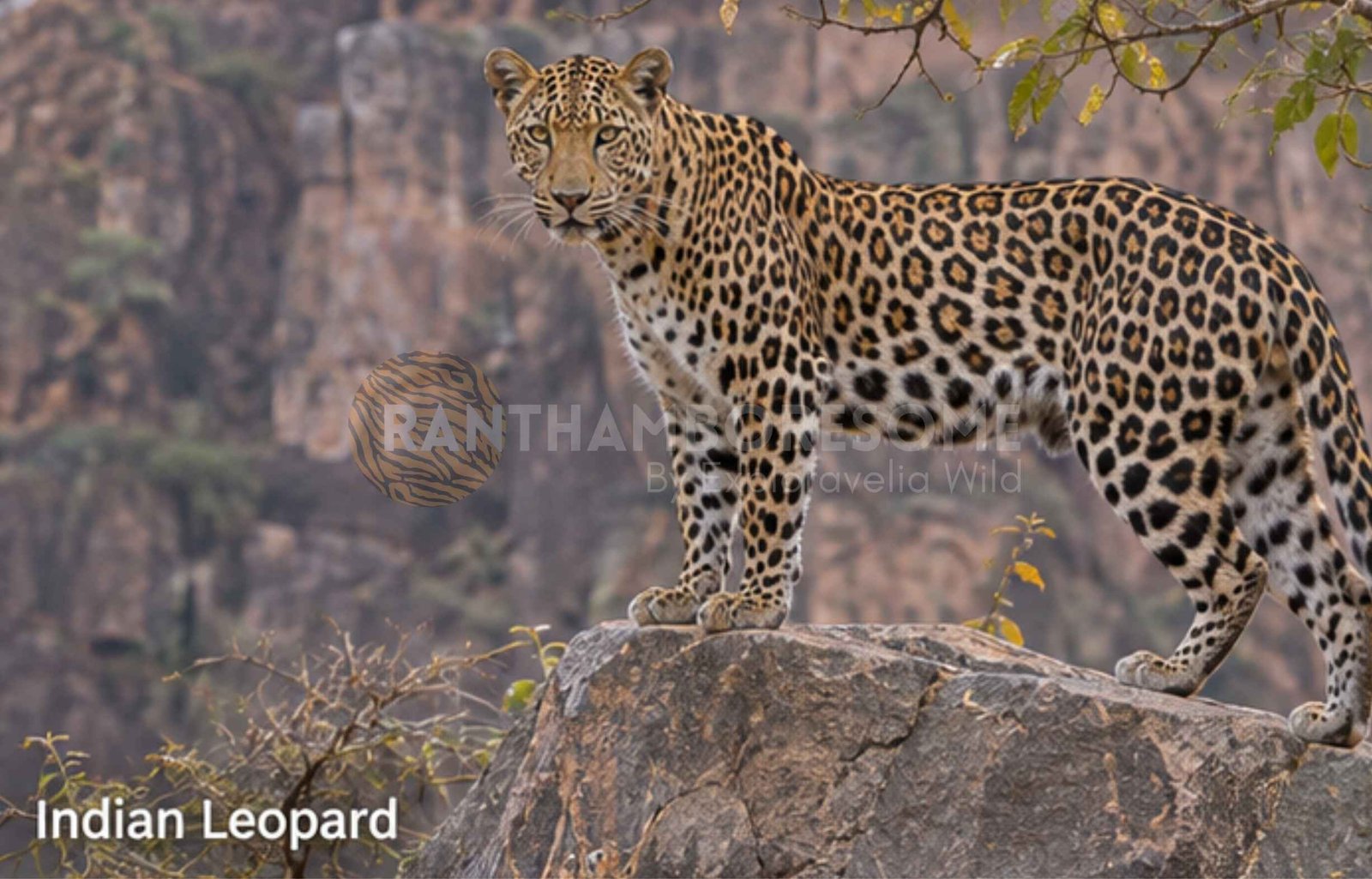
2. Indian Leopard
A leopard’s coat has dark, ring-like markings called rosettes. These markings help it blend into rocky slopes and shaded woodland. If your guide spots a leopard, ask for a landmark such as a boulder or a fork in a tree. That will help you find the animal through binoculars.
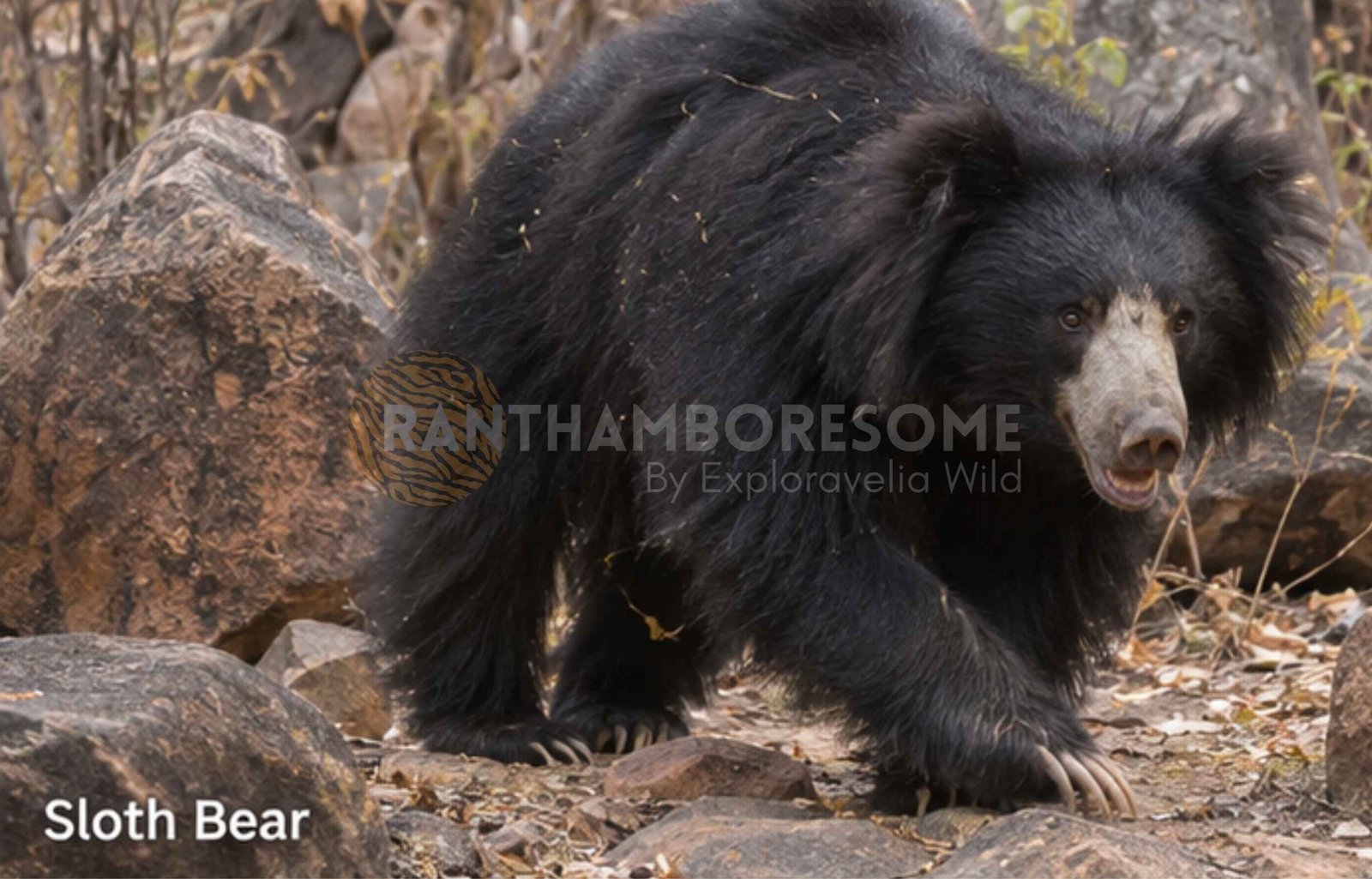
3. Sloth Bear
A shaggy black coat, a pale muzzle and long claws help identify a sloth bear. If you notice a dark shape moving among rocks or bushes, look for its lighter face. A clear view of the muzzle can help you identify it even when vegetation hides part of its body.
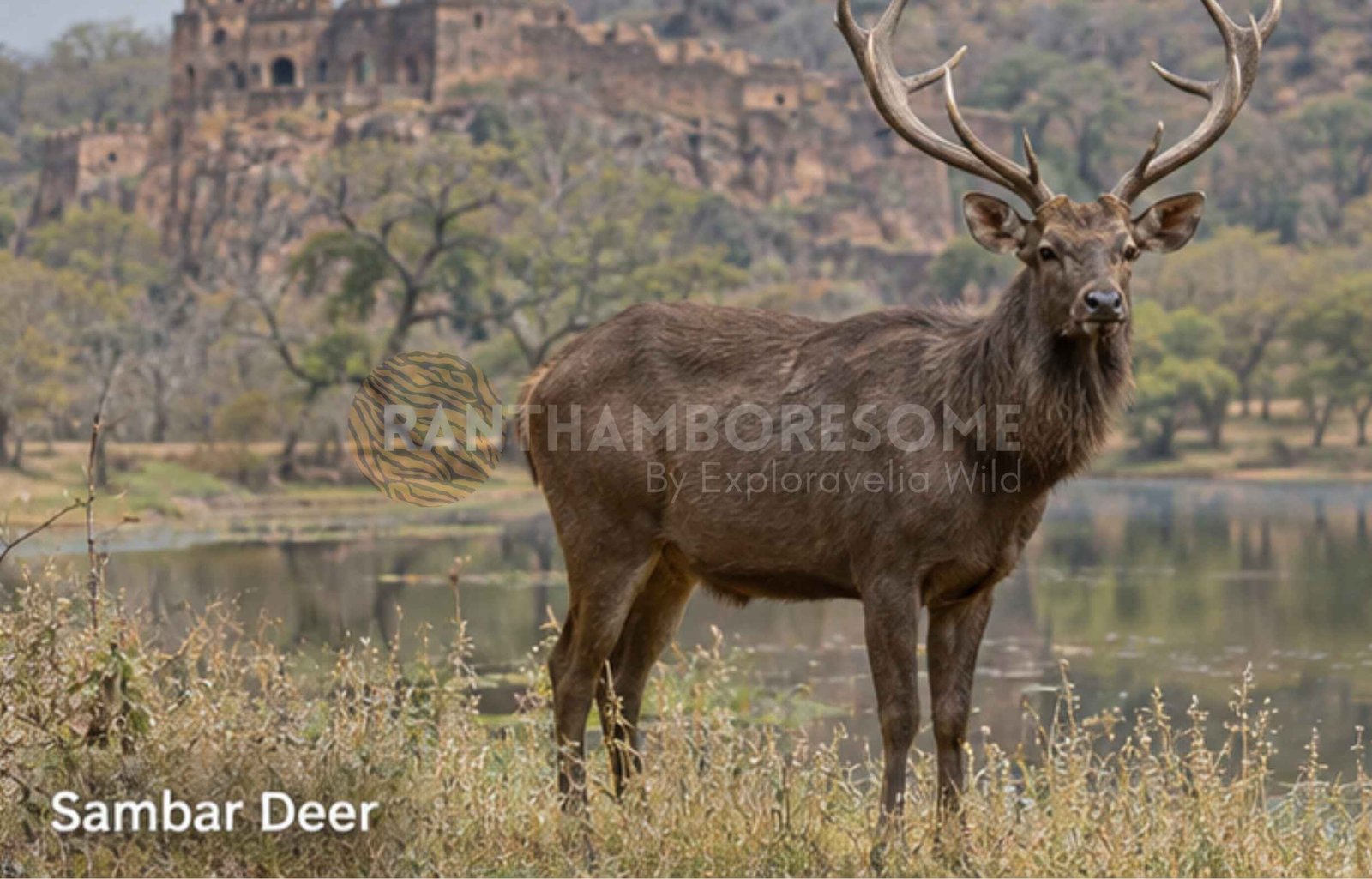
4. Sambar Deer
Sambar have a heavier build and a darker coat than chital. Adult males can also have large, branching antlers. If you spot a deer near a lake or at the edge of a clearing, compare its build and coat first. Both features are useful when the head is hidden.
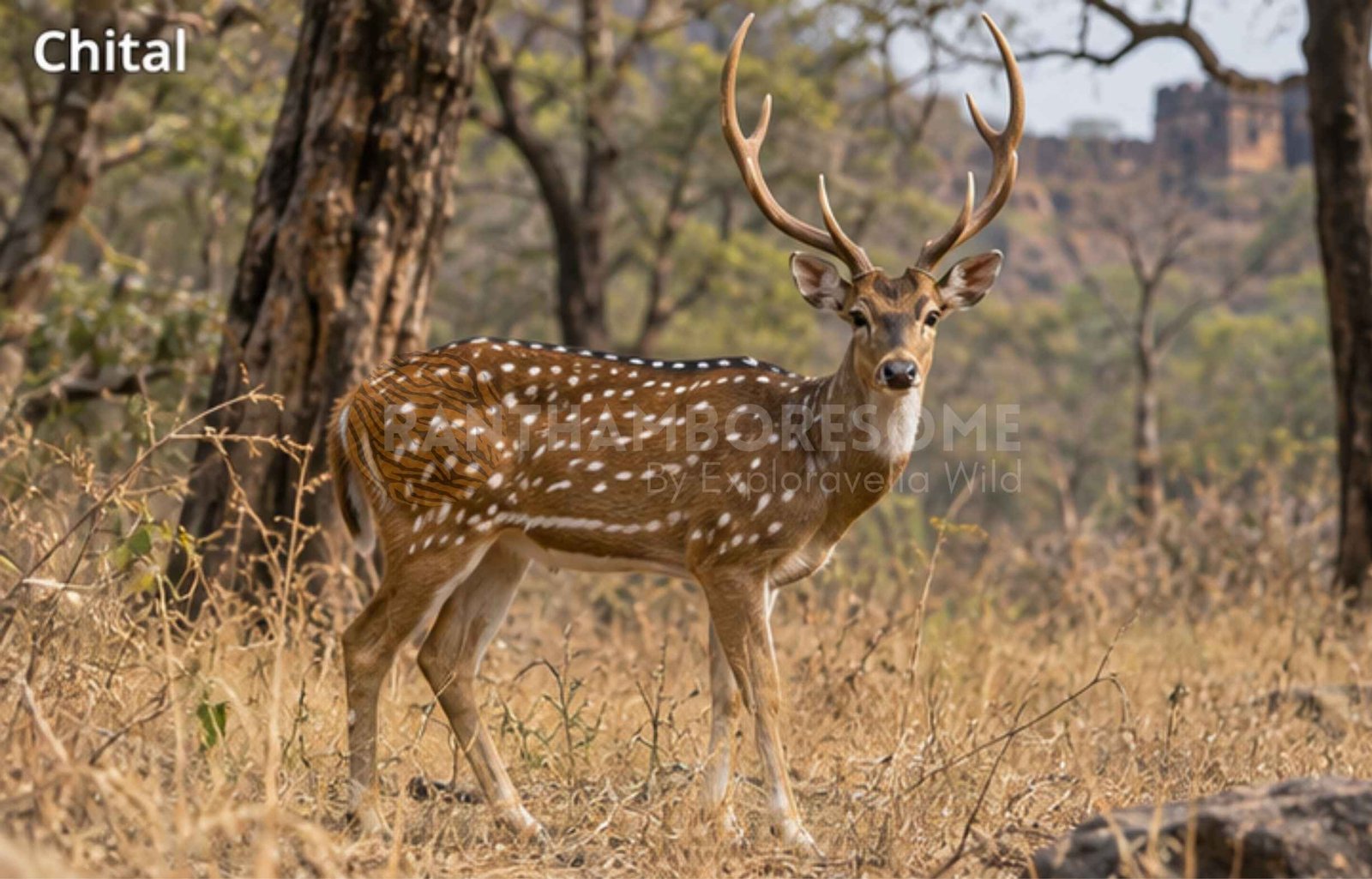
5. Chital (Spotted Deer)
Chital have white spots on a reddish-brown coat. If you see a few deer near a clearing, look along the tree line too. Other members of the group may be standing in the shade. Even without a close view, the spotted coat can help you distinguish chital from sambar.
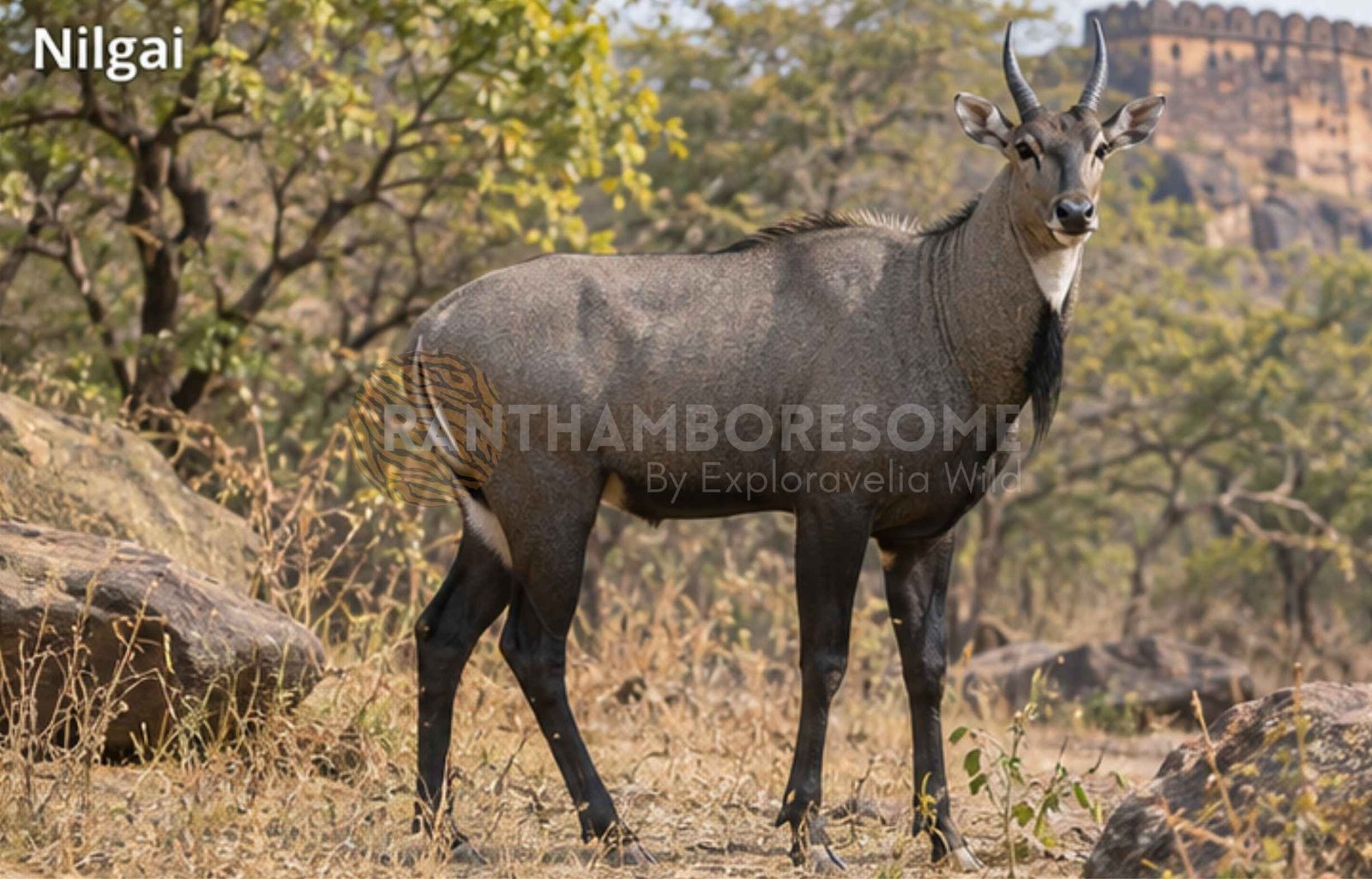
6. Nilgai (Blue Bull)
The nilgai is a large antelope with long legs and tall shoulders. Adult males typically have a blue-grey coat and short horns, while females are usually browner. When the animal is far away, its shoulder profile may be easier to recognise than its colour.
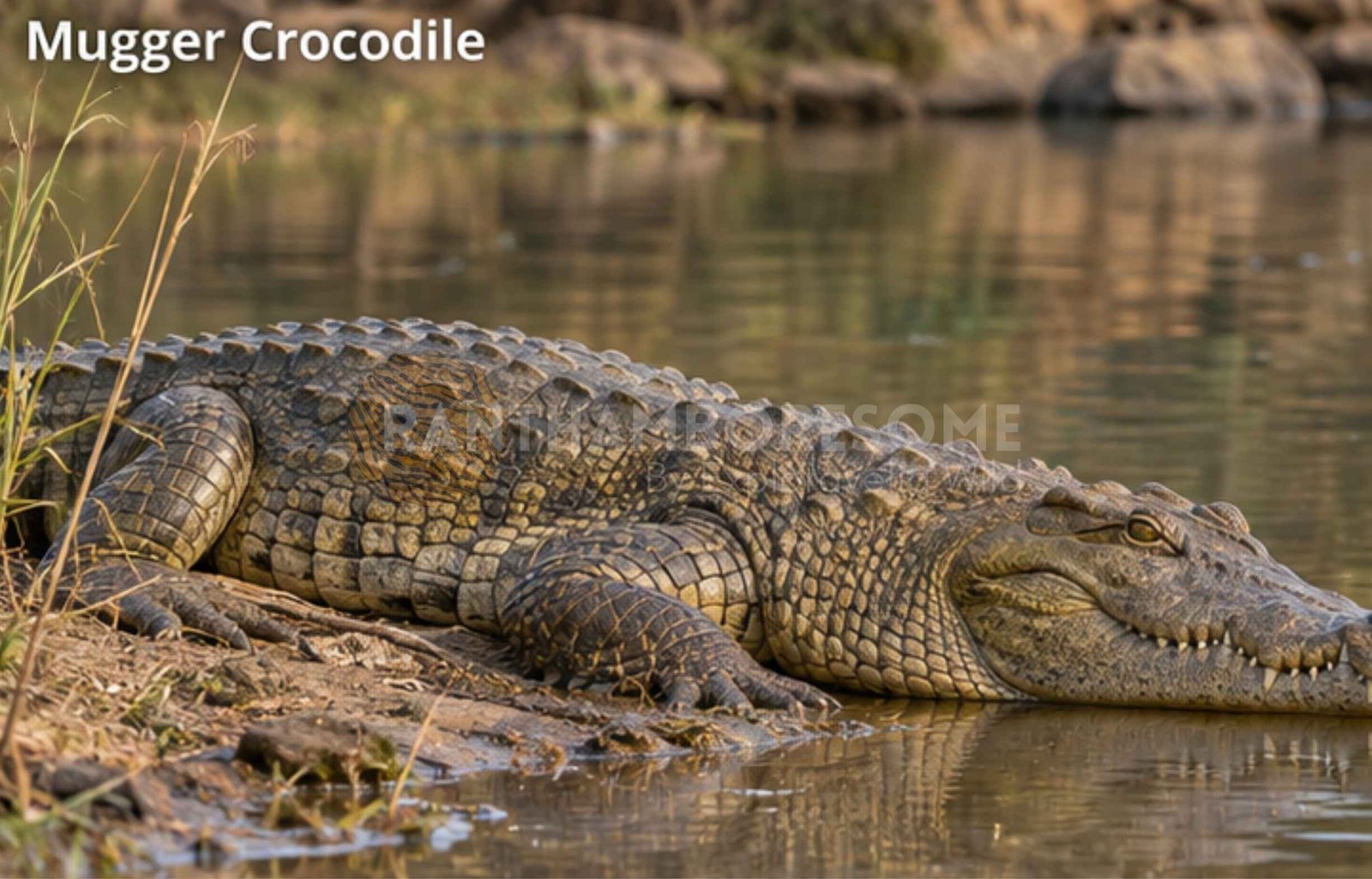
7. Mugger Crocodile
Mugger crocodiles, also called marsh crocodiles, live in Ranthambore. Scan the lake margins slowly from your vehicle. A resting mugger can resemble a log, so look for its broad snout and the raised scales along its back.
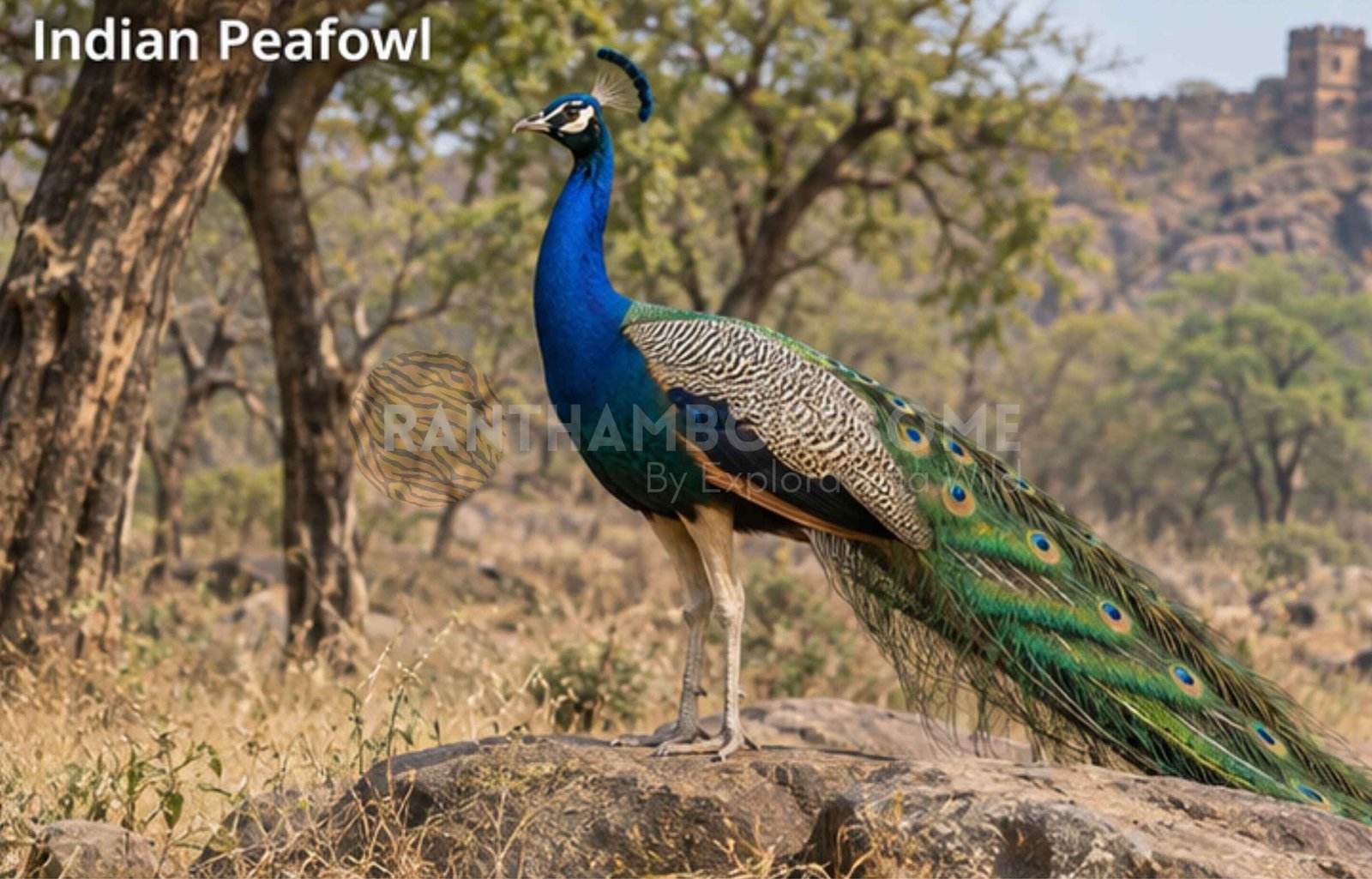
8. Indian Peafowl
The male Indian peafowl, or peacock, has a vivid blue neck, an upright crest and a long train. You can recognise it even when it keeps its feathers folded. Look along forest tracks and check nearby branches for perched birds.
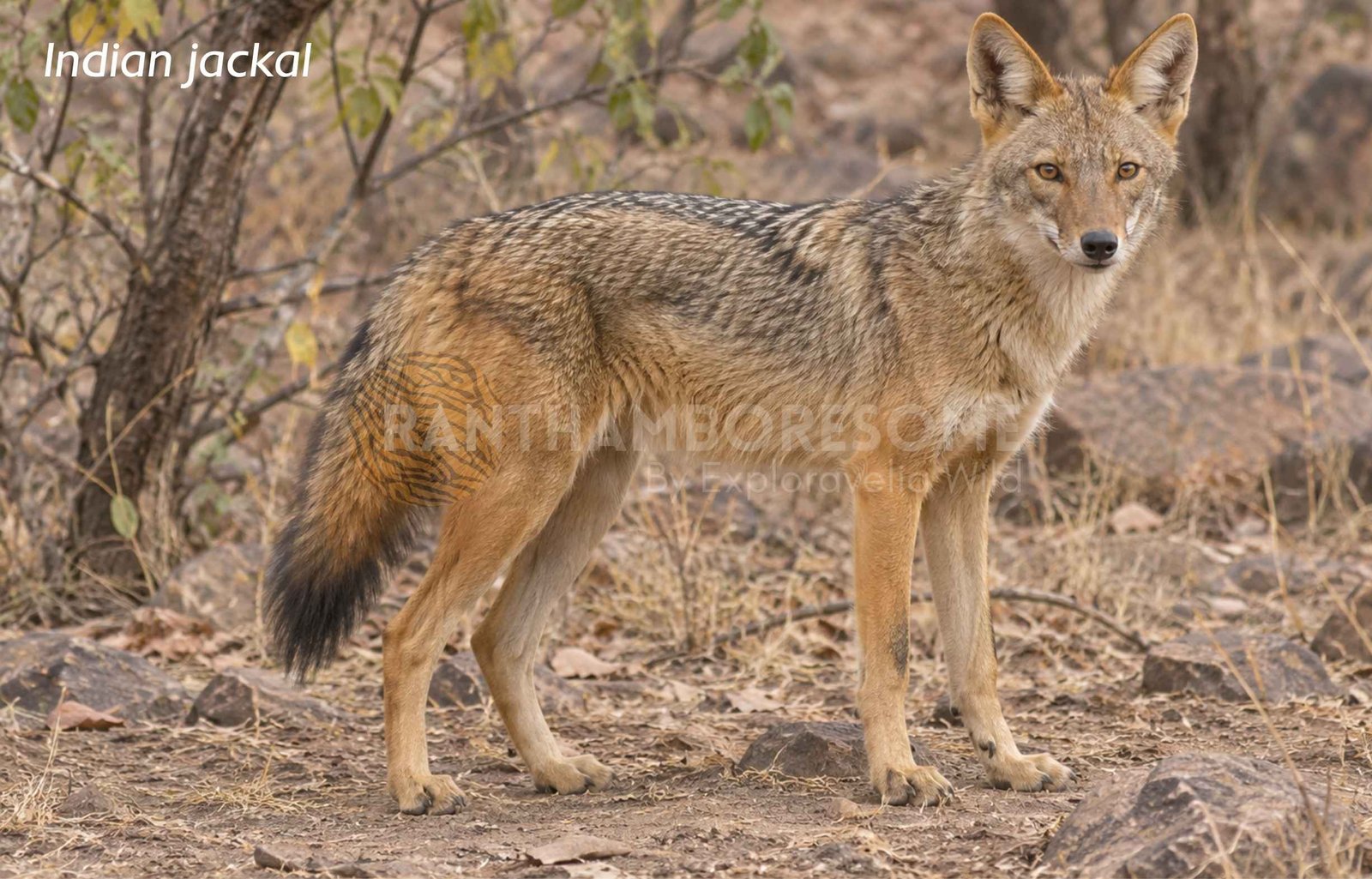
9. Golden jackal
A golden jackal has pointed ears, a narrow muzzle and a golden-grey coat. If you see a dog-like animal moving near a clearing, check those features through your binoculars. The Rajasthan Forest Department records the golden jackal in Ranthambore Tiger Reserve.
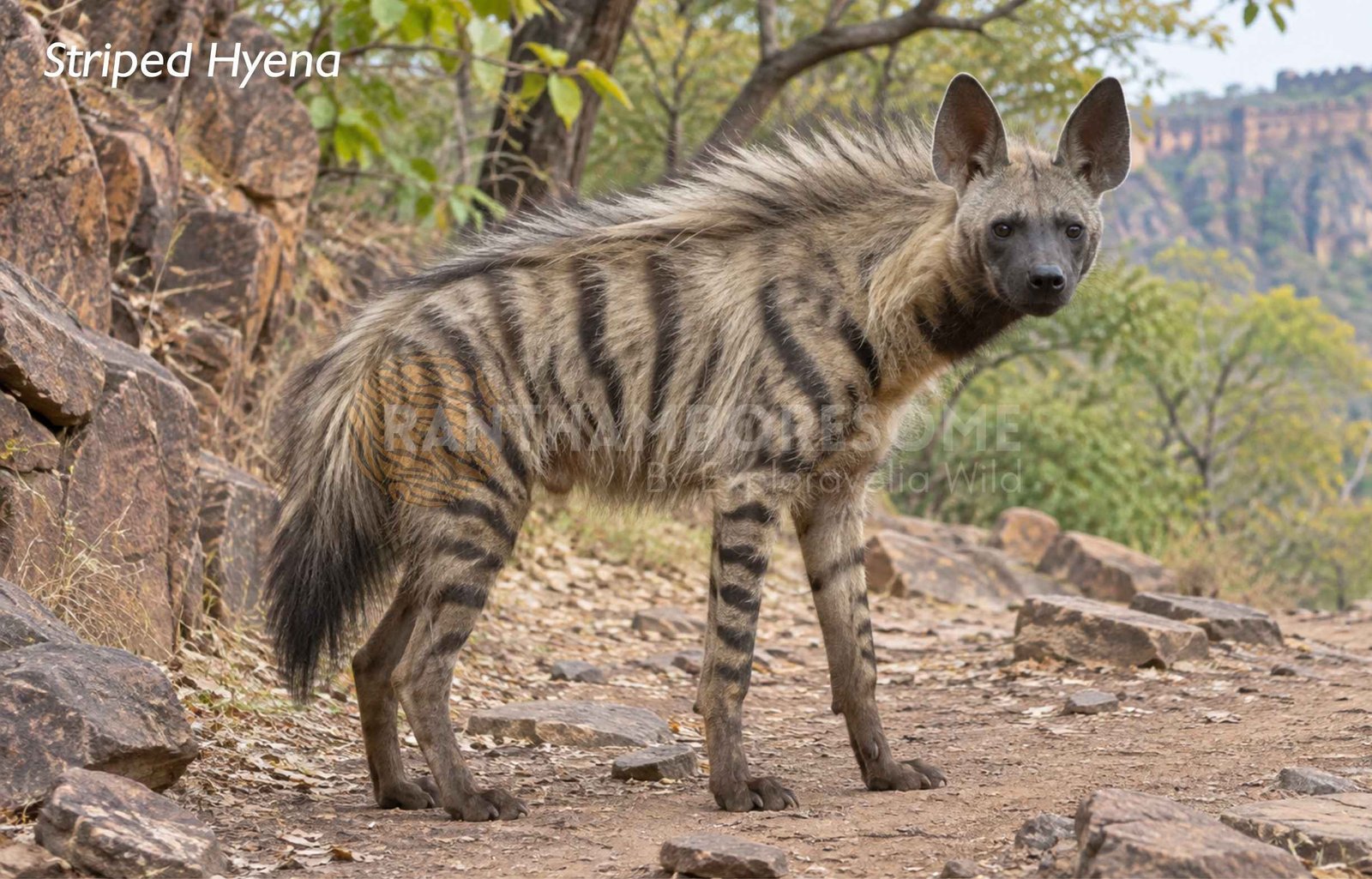
10. Striped Hyena
Look for dark stripes across the body and legs, a shaggy mane and a back that slopes down from the shoulders. These features help identify the striped hyena if you get a clear view. It lives in Ranthambore, and a safari sighting is a matter of chance.
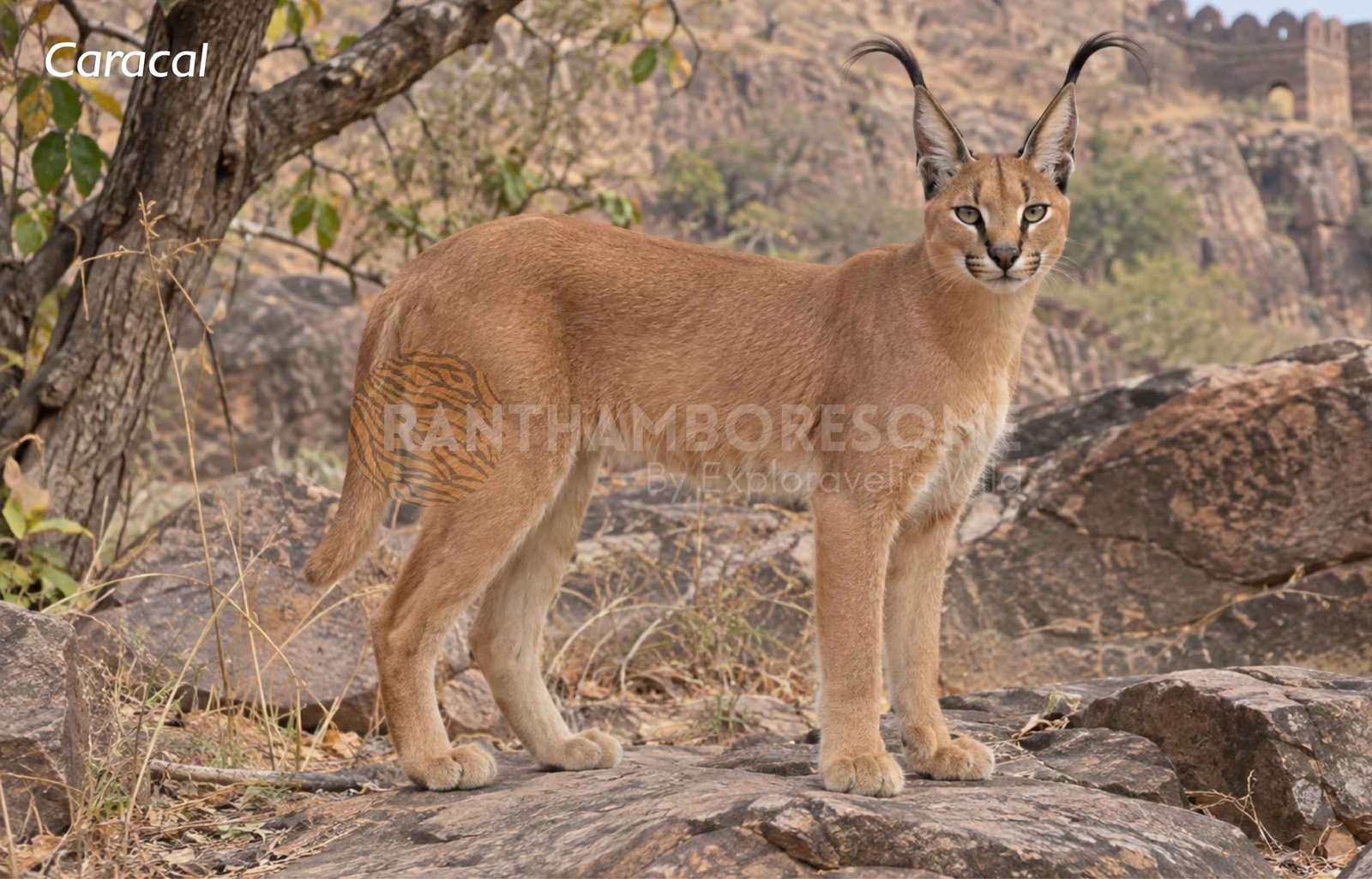
11. Caracal
The caracal’s most distinctive feature is the pair of long black tufts at the tips of its ears. Its tawny coat can blend into dry grass and rocky ground. The Forest Department records caracals in the reserve, but treat any sighting as a bonus when planning your safari.
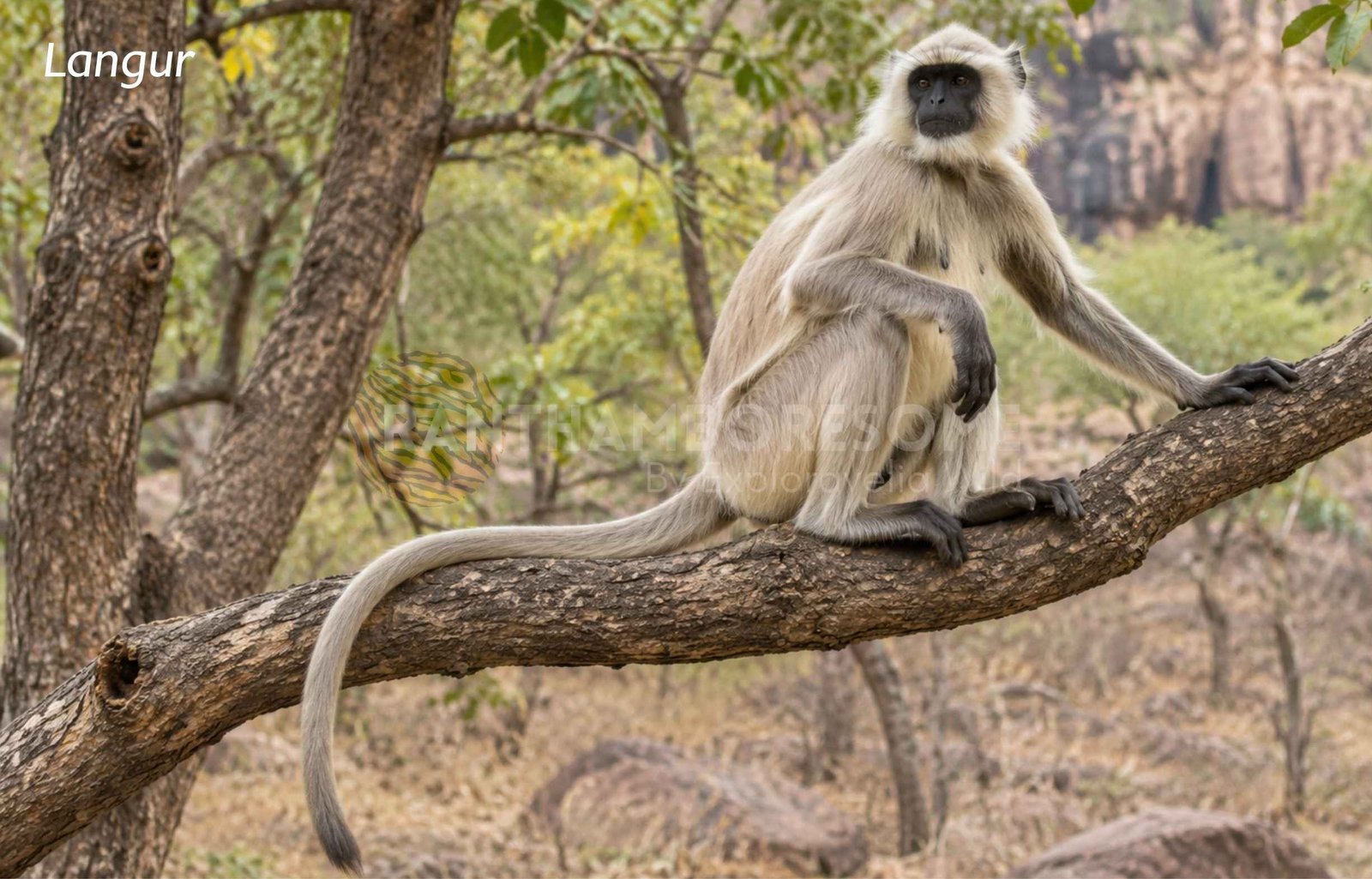
12. Gray Langur
A dark face, pale grey coat and long tail help you recognise the gray langur. If you see one on a roadside branch, scan the surrounding trees too. You may find others from the group sitting in the canopy or moving across the forest floor.
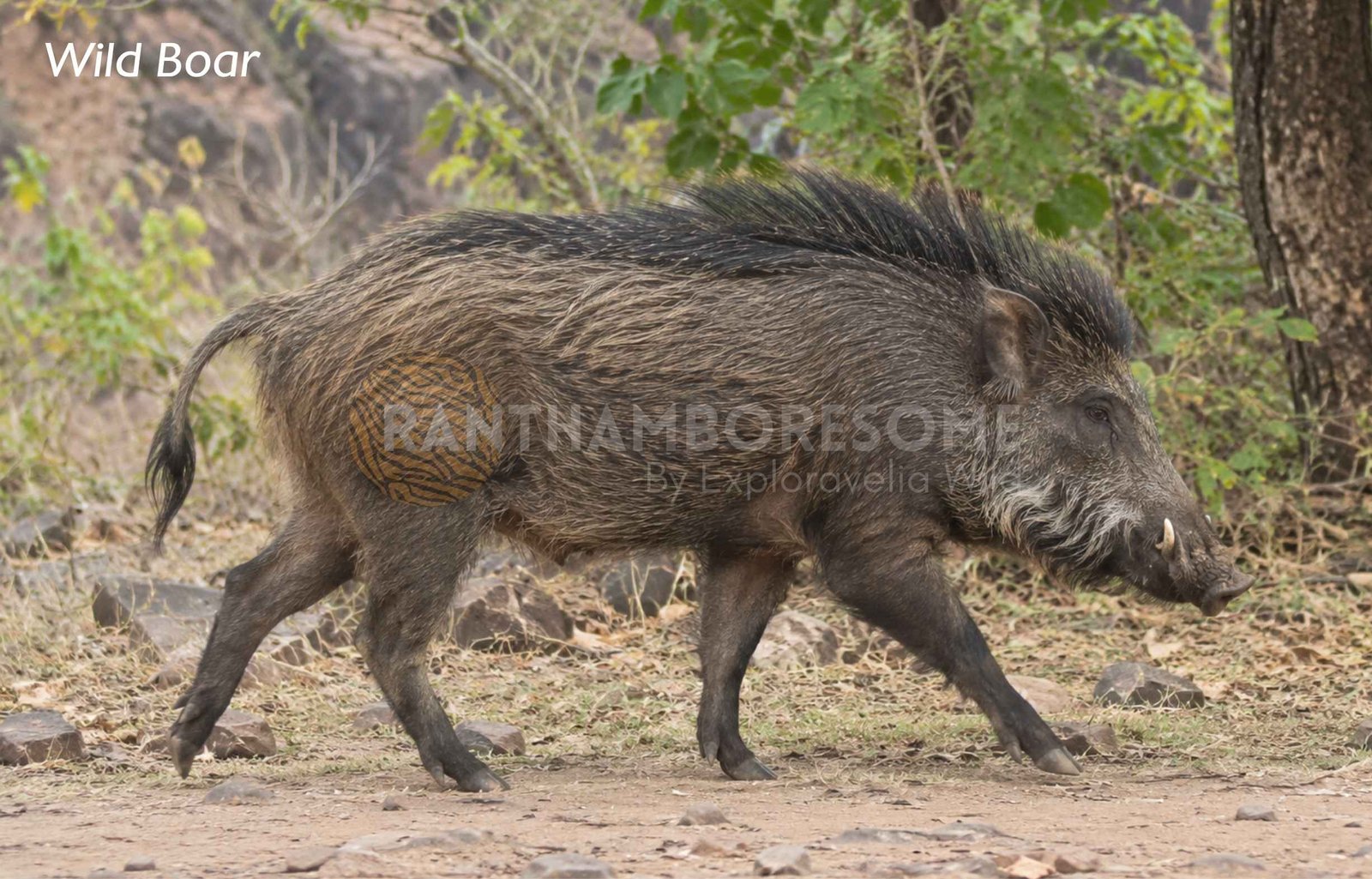
13. Wild Boar
Look for a stocky body, coarse bristles and a long snout. You might see a wild boar with its head down near a forest edge as it searches the ground for food. The Forest Department lists the species as wild pig in its conservation plan for Ranthambore Tiger Reserve.
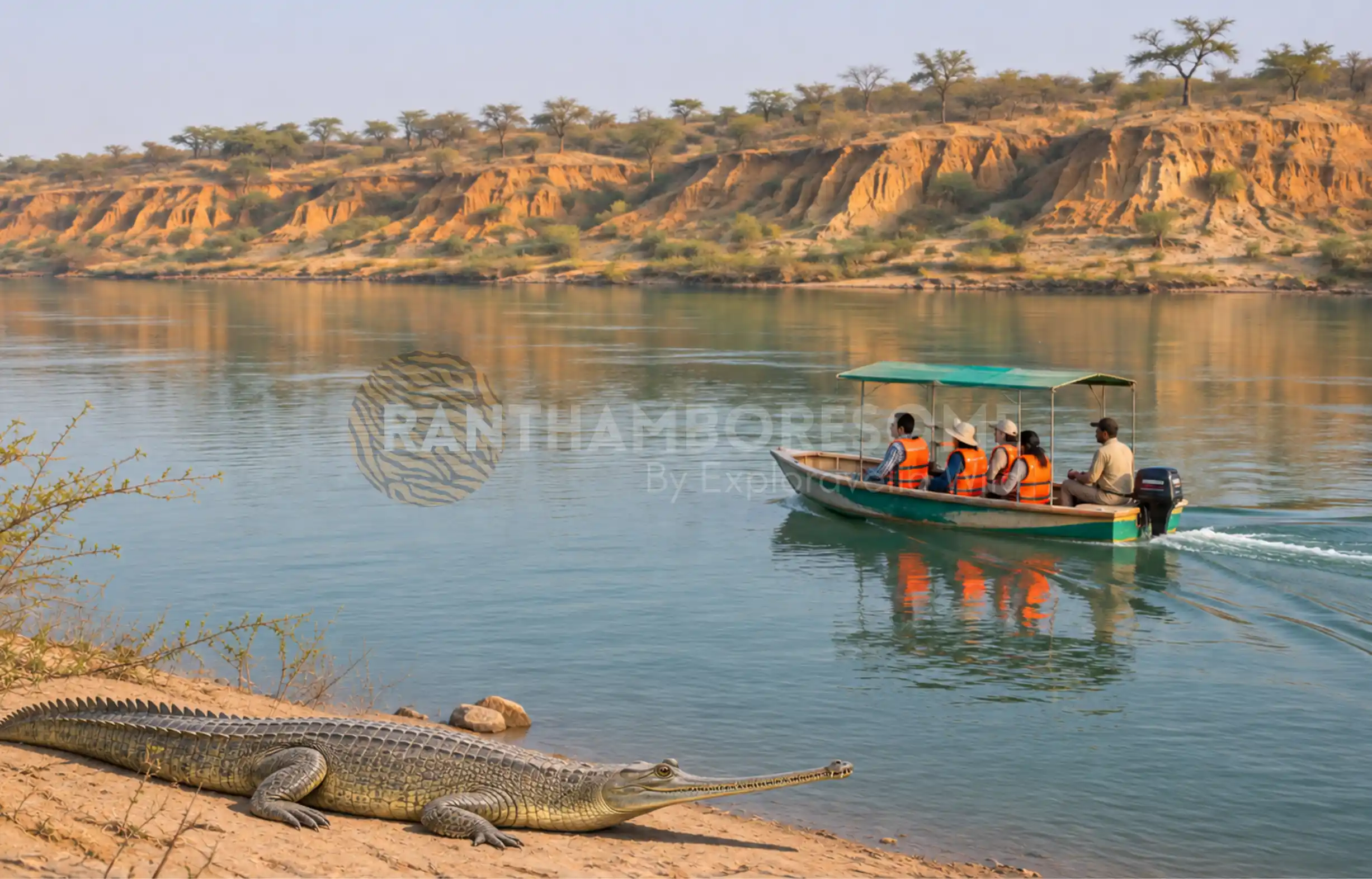
14. Gharial on a Chambal Boat Safari
If you want to look for gharials, add a Chambal boat safari from Palighat to your Ranthambore itinerary. From the boat, scan sandy banks for a crocodilian with a very long, narrow snout. This feature helps distinguish the gharial from the broad-snouted mugger. Both species occur in the Palighat area of the National Chambal Sanctuary.